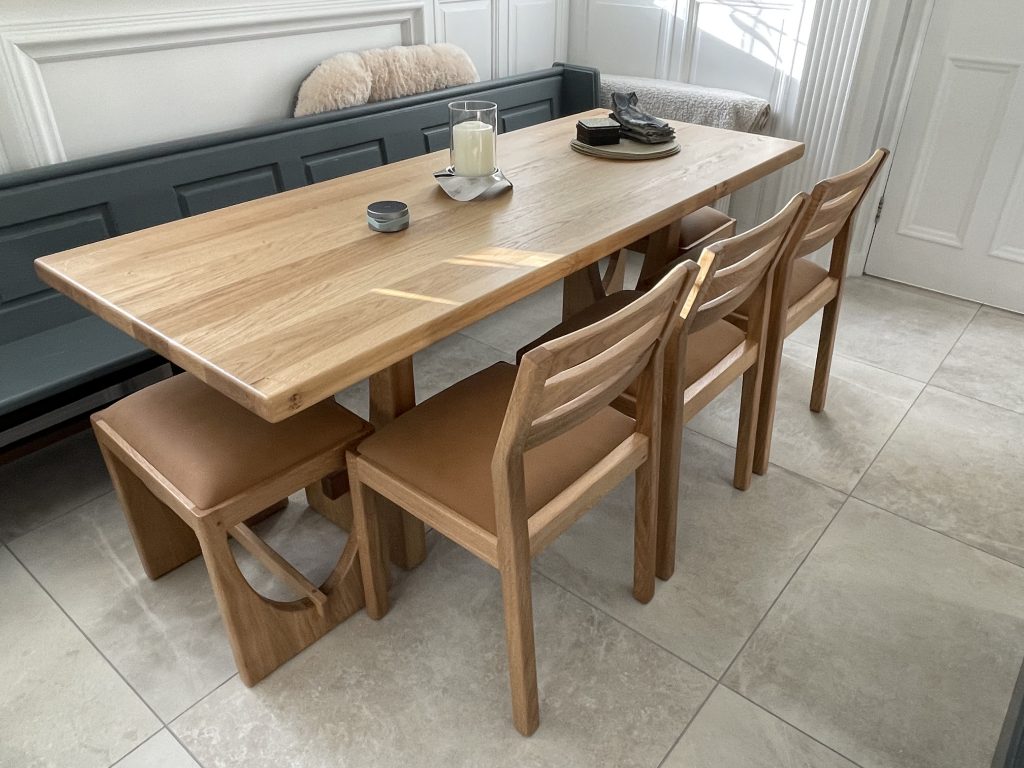
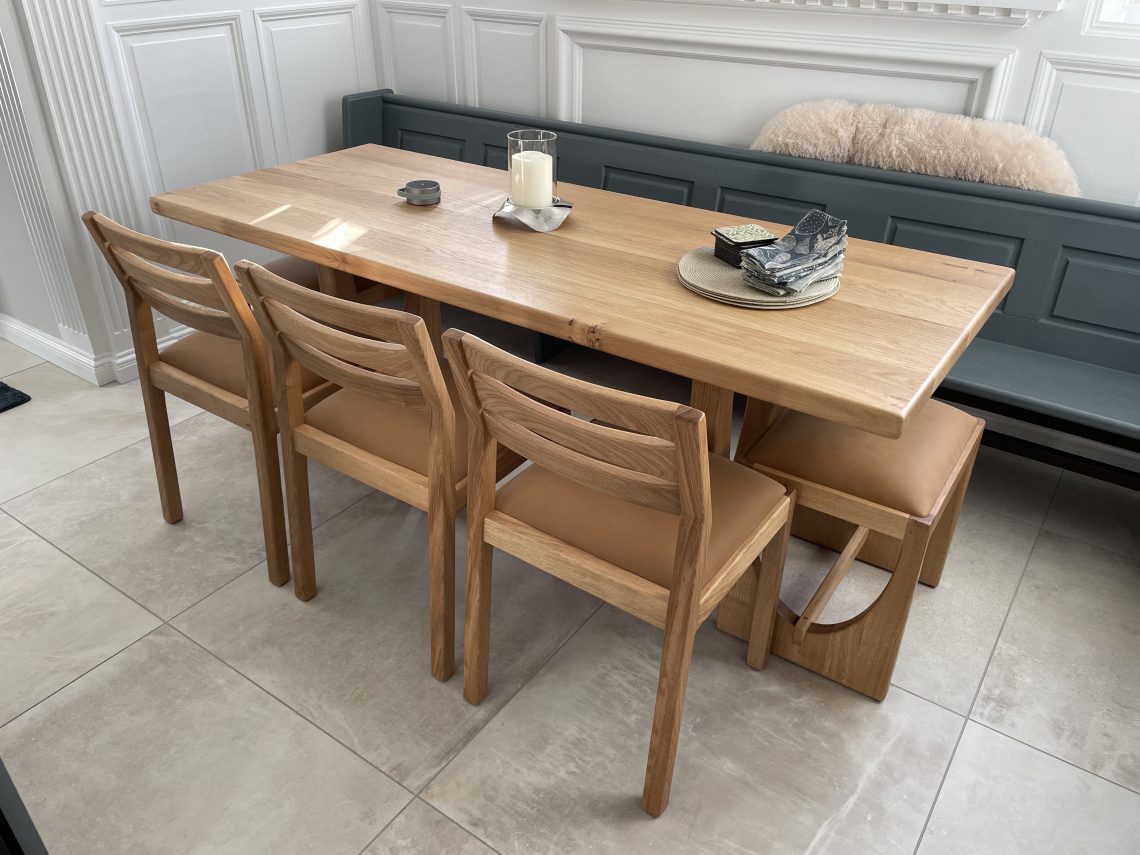
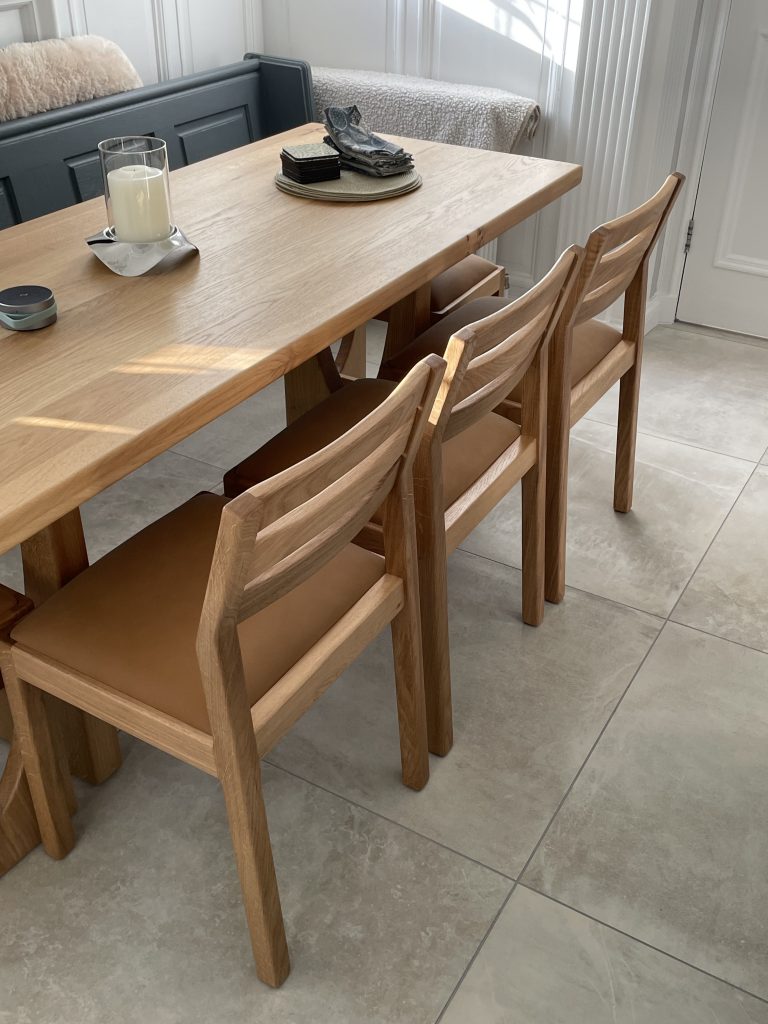
My clients were undertaking an extensive refurbishment of their home in North Berwick prior to relocating there. A new kitchen was part of the refurbishment and they commissioned me to make them a “Corncrake” table with matching stools and chairs.
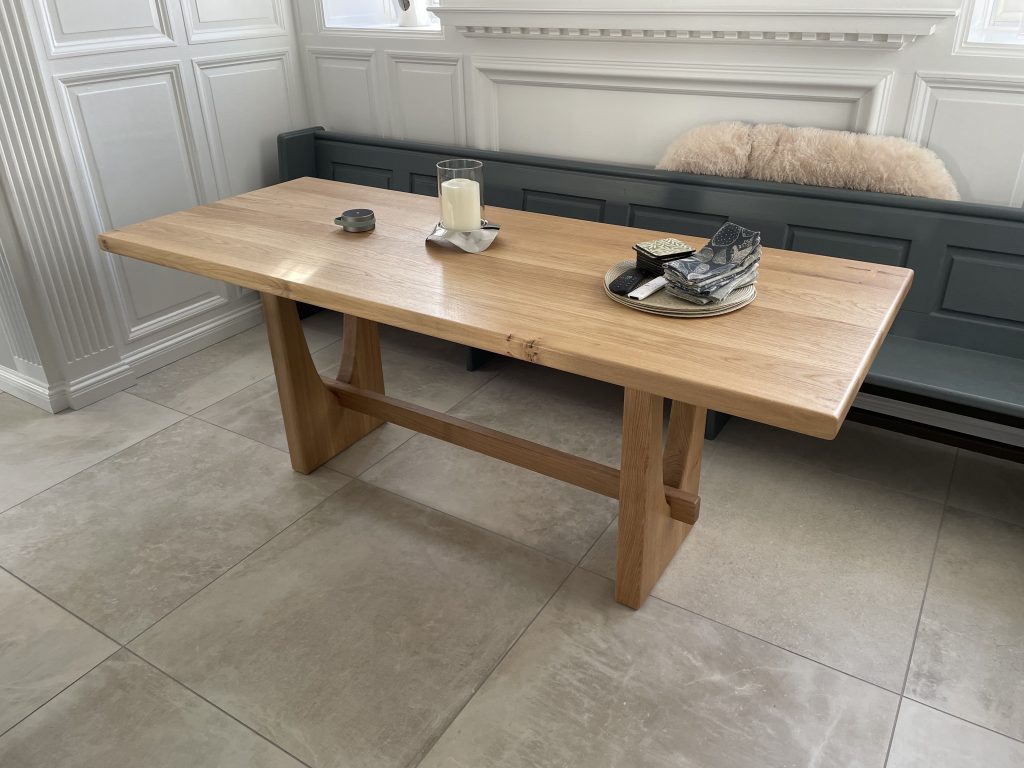
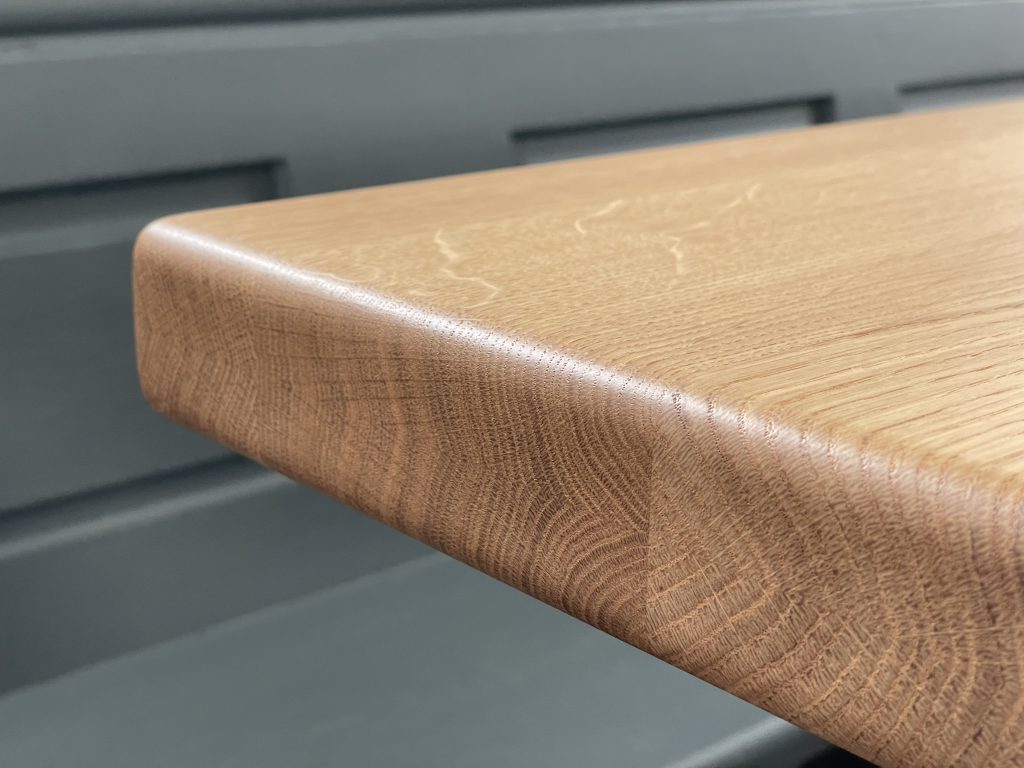
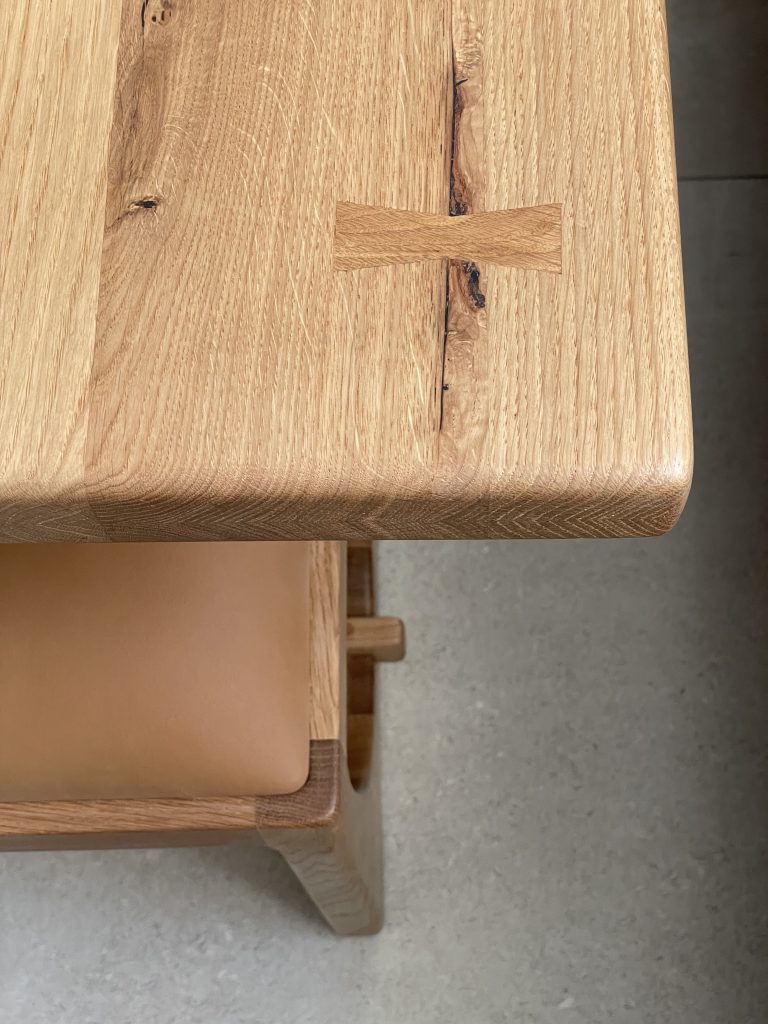
My earlier “Corncrake” dining tables were over 1.2 metres wide but due to the floor layout of the new kitchen the new table could be only 80 cm wide. The “Corncrake” design with its ‘inbound’ pedestal legs is perfect to allow passage past the ends of the table and movement along the pew seating at the rear. The table legs, which on the larger design were previously 53 cm wide, were reduced in width to 40 cm to give good knee space while maintaining stability. Other dimensions of the table were maintained – the top is 25 mm thick with the folded over lip giving a total thickness of 50 mm at the edge – although the height of the table was increased to 78 cm to accommodate a tall family. (As a slight aside, it’s my personal opinion that the general increase in size of the population over time is not considered enough in furniture and the traditional height of furniture should be increased.) The client wanted to maximise protection for the table surface so I recommended a lacquer and what you see here is Manns Trade Bar Top Lacquer (matt).
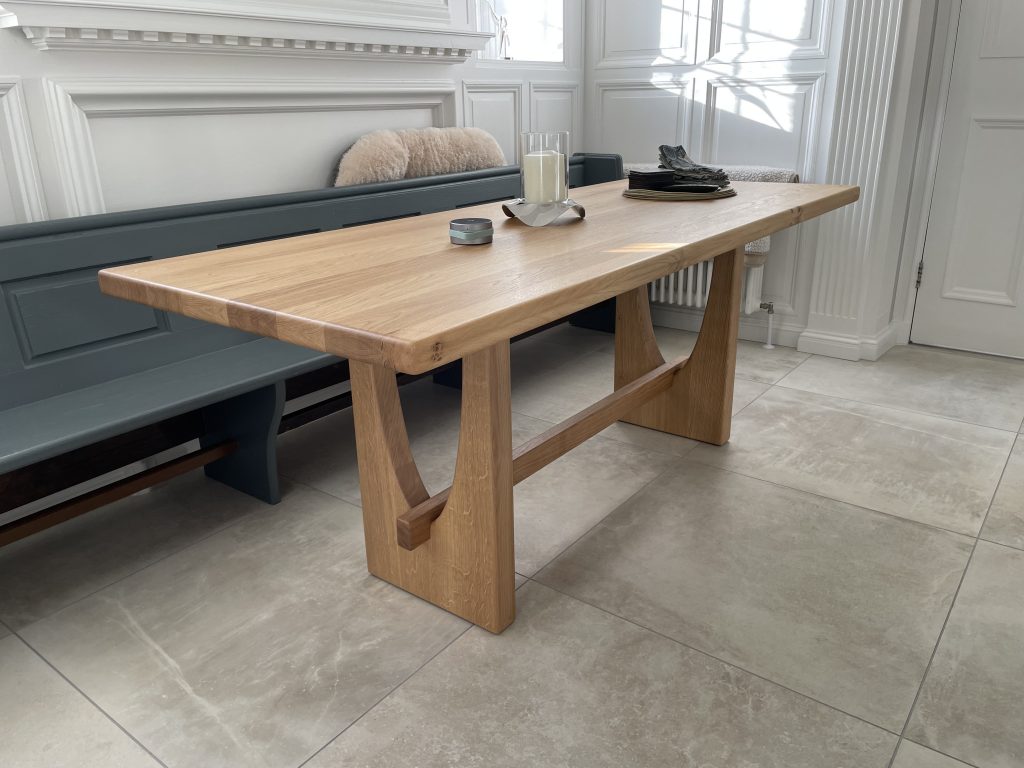
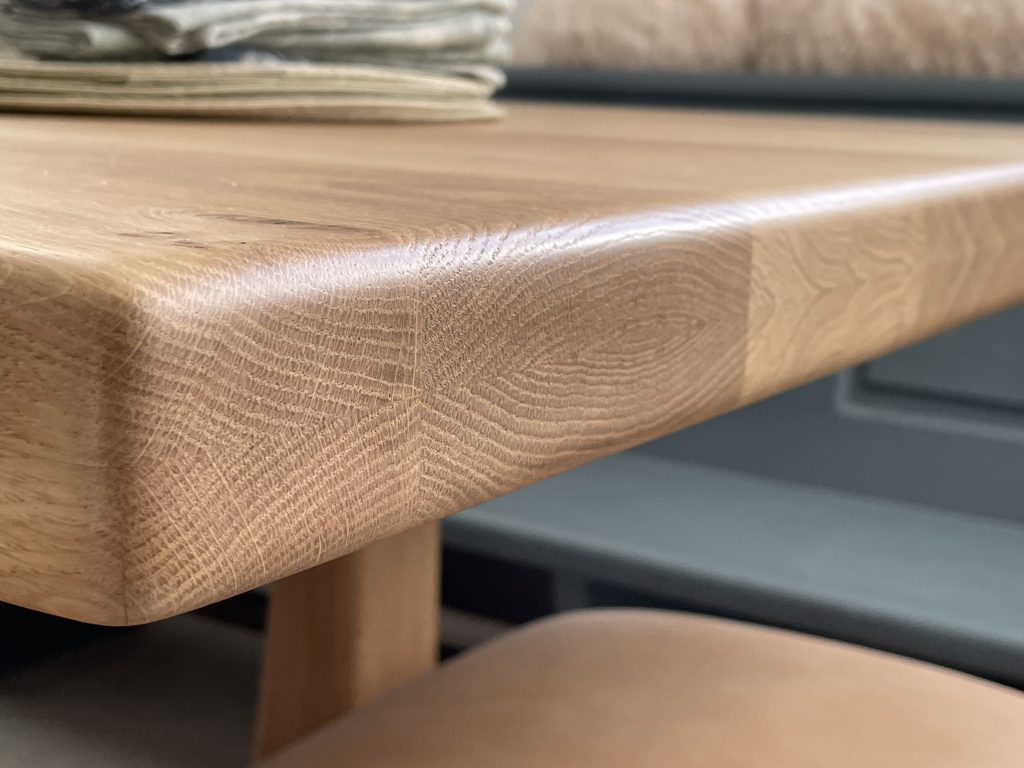
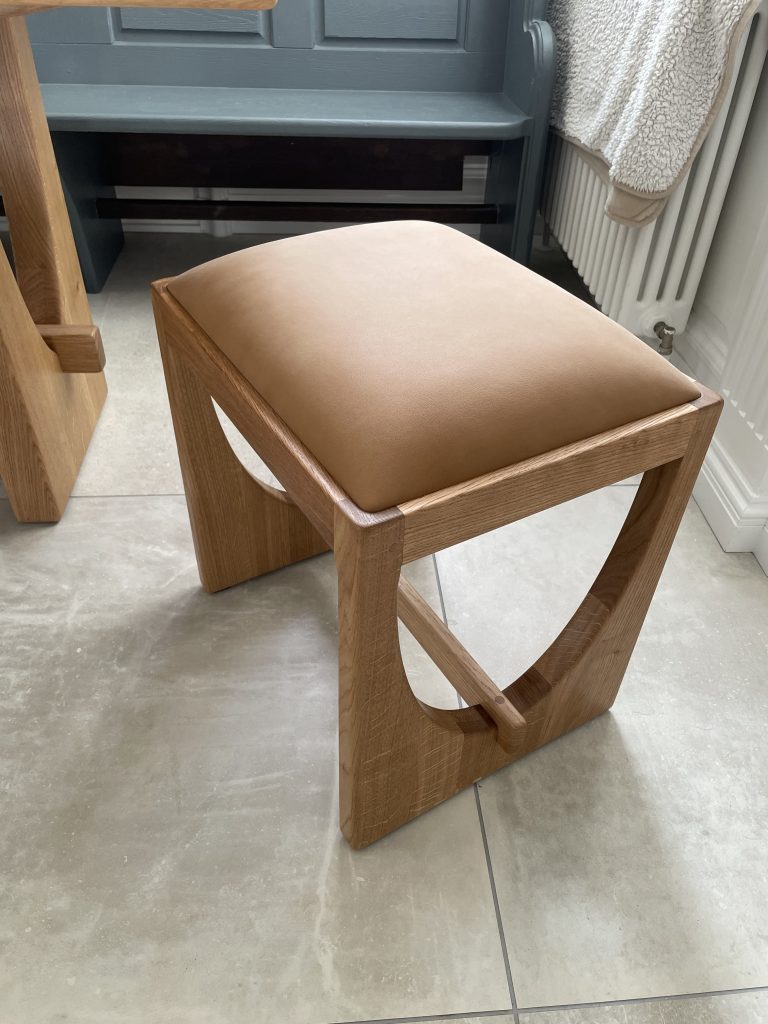
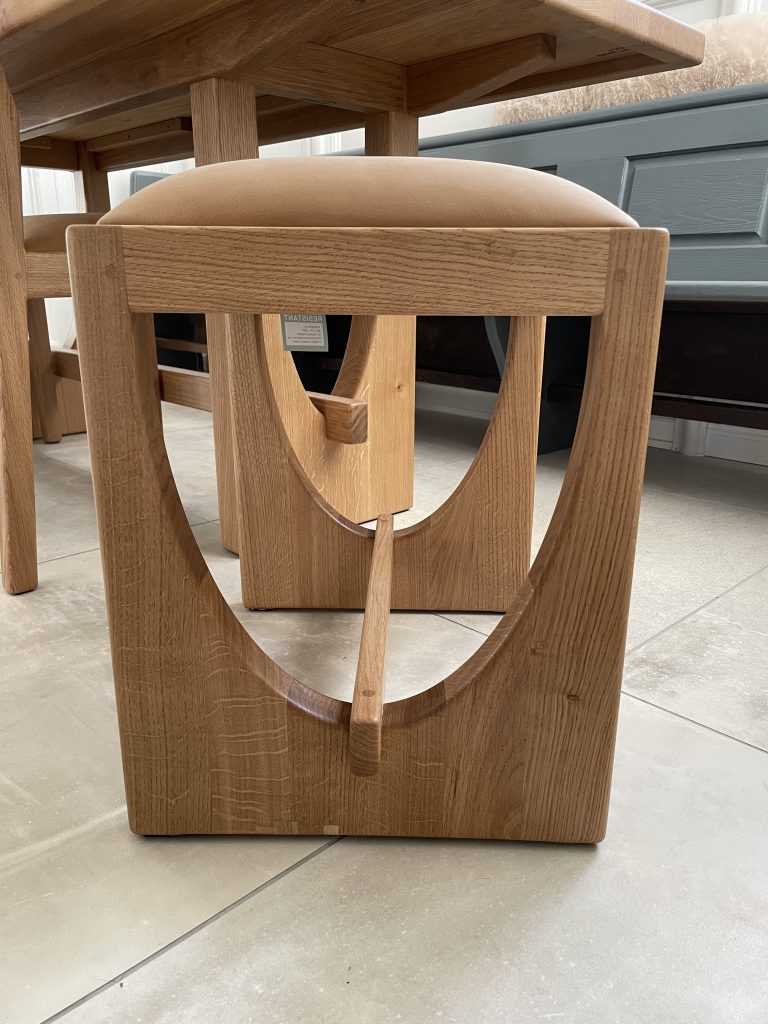
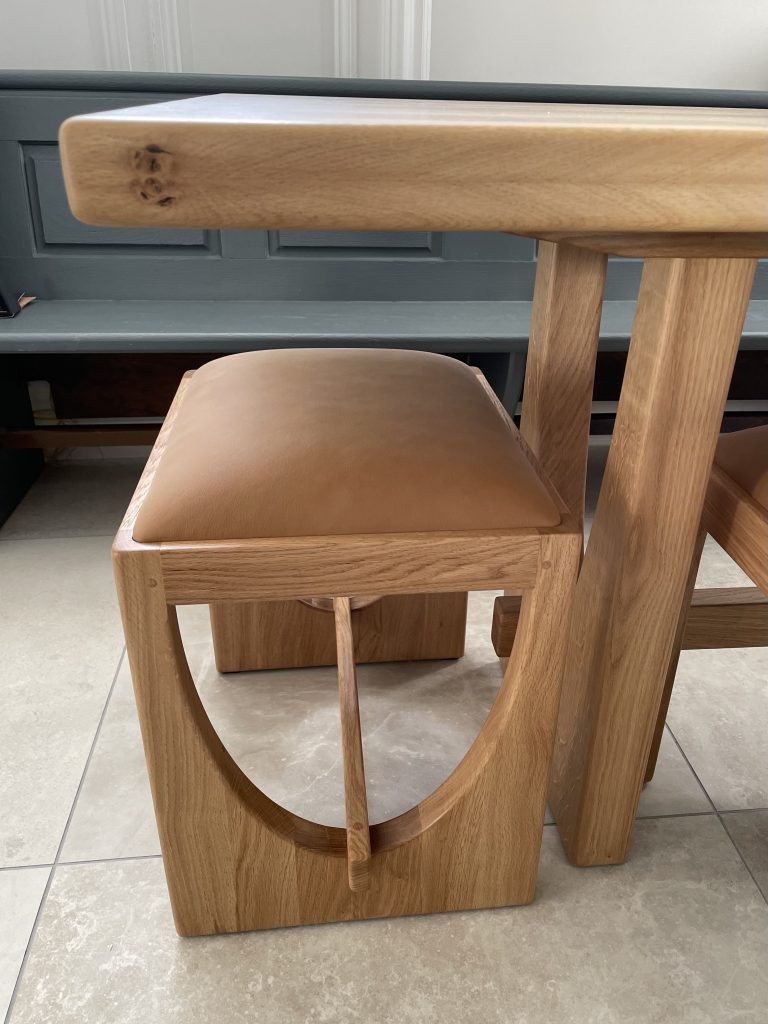
The stools were styled in the same manner as the table with ellipse cut-out legs and bottom stretcher. They were sized to be parked under the ends of the table and are upholstered with pad seats using webbing and foam which are covered with Tempesta Acacia leather from Crest Leather. The upper rails of the stools are flush with the legs for the comfort of the sitter. Peg details in the joints match peg details in the base of the table.
I would have liked to continue the same ellipse-legged design into the chairs but I decided against it for a few reasons. The backrest of the chair would make the design unbalanced, the solid bottom of the legs would prevent people tucking their feet underneath and would limit movement when people get up and move between chairs and the mass would be too great.
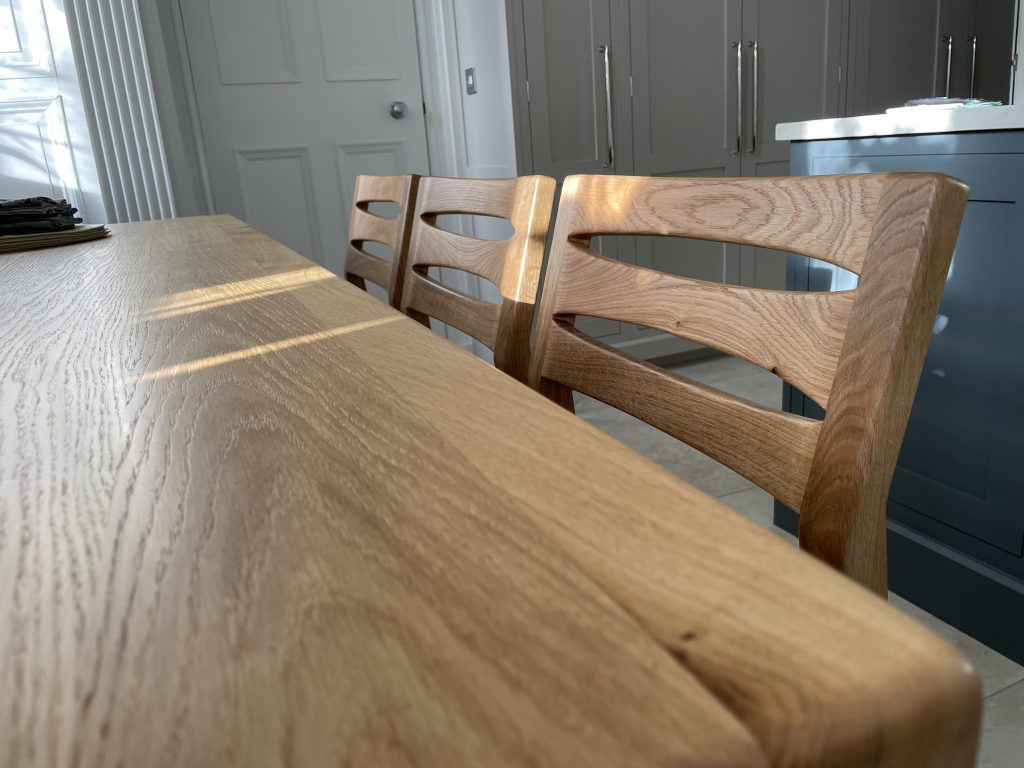
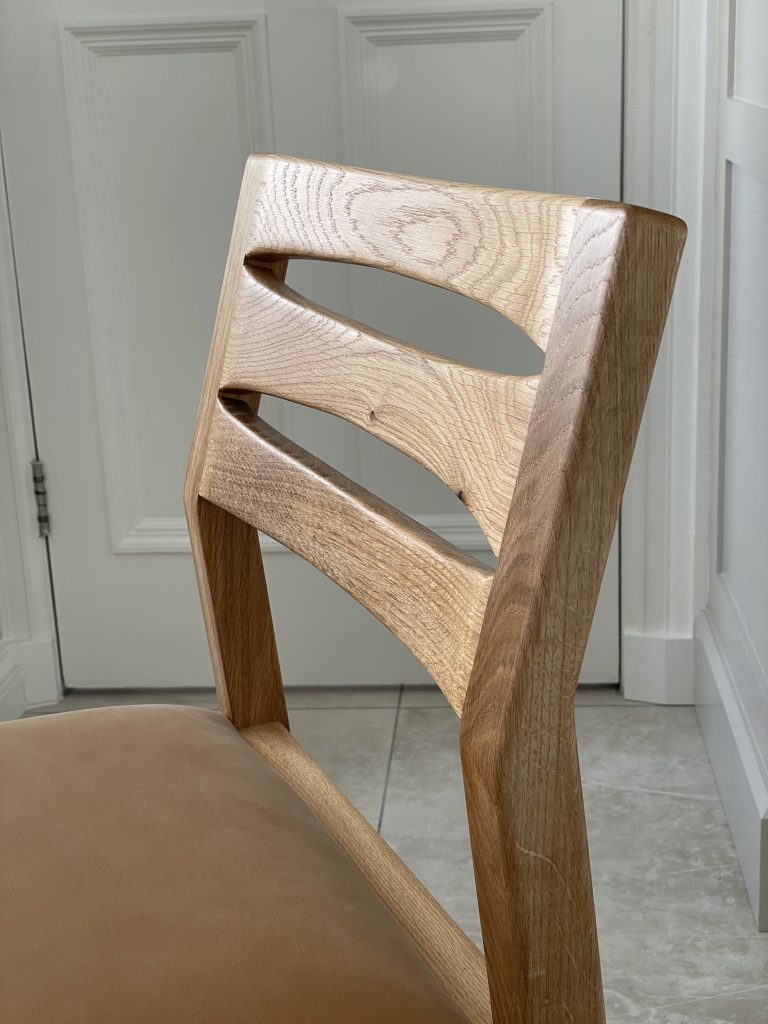
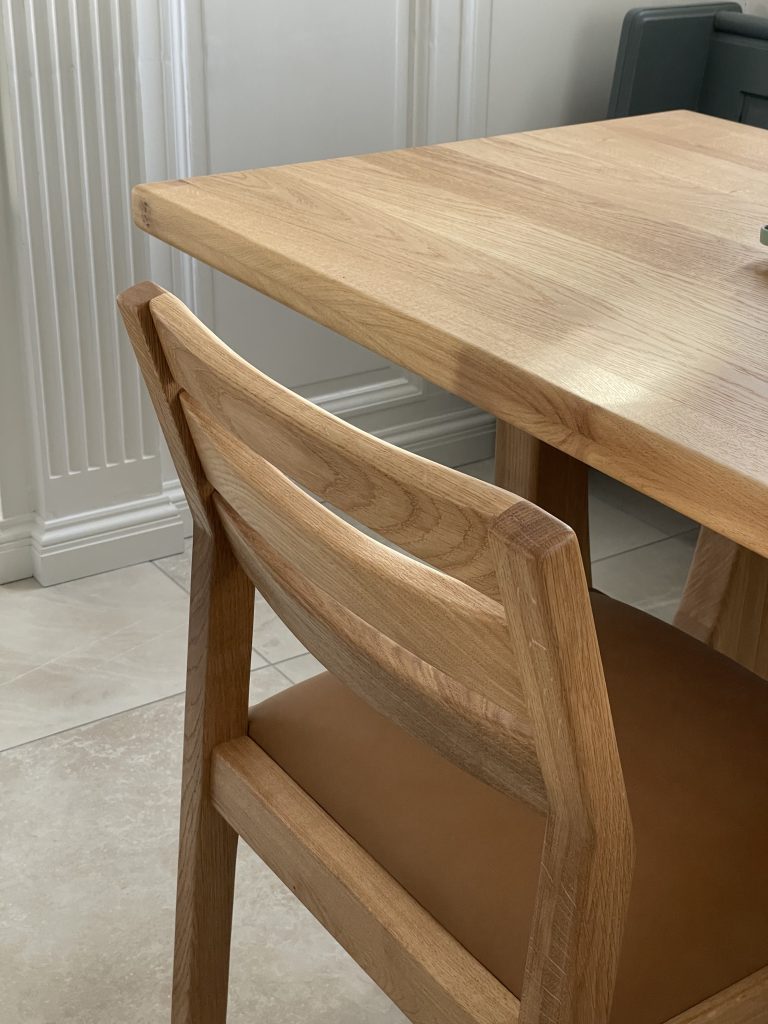
The design that was chosen moves the ellipse motif into the backrest with a double cut-out being formed between three curved spars of the backrest. The back legs are continuous pieces of timber and are angled forward from the base but then kink backwards to set the angle of the backrest. The backrest, comprising the three curved spars, is sufficiently tall to give good support whilst also giving ample bum space below. Dining chairs are often tapered in width from front to back which reduces their visual (and physical) mass but does not add to the comfort. So, I kept the design untapered to maximise bum space and match the lack of any taper in the table and stool designs.
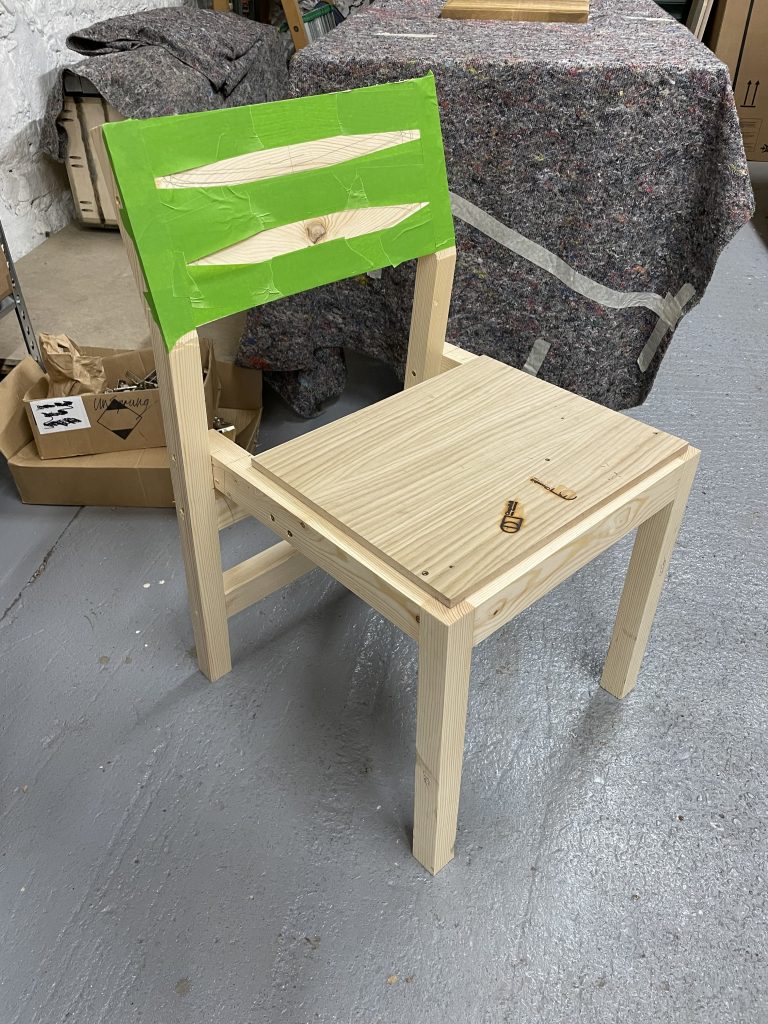
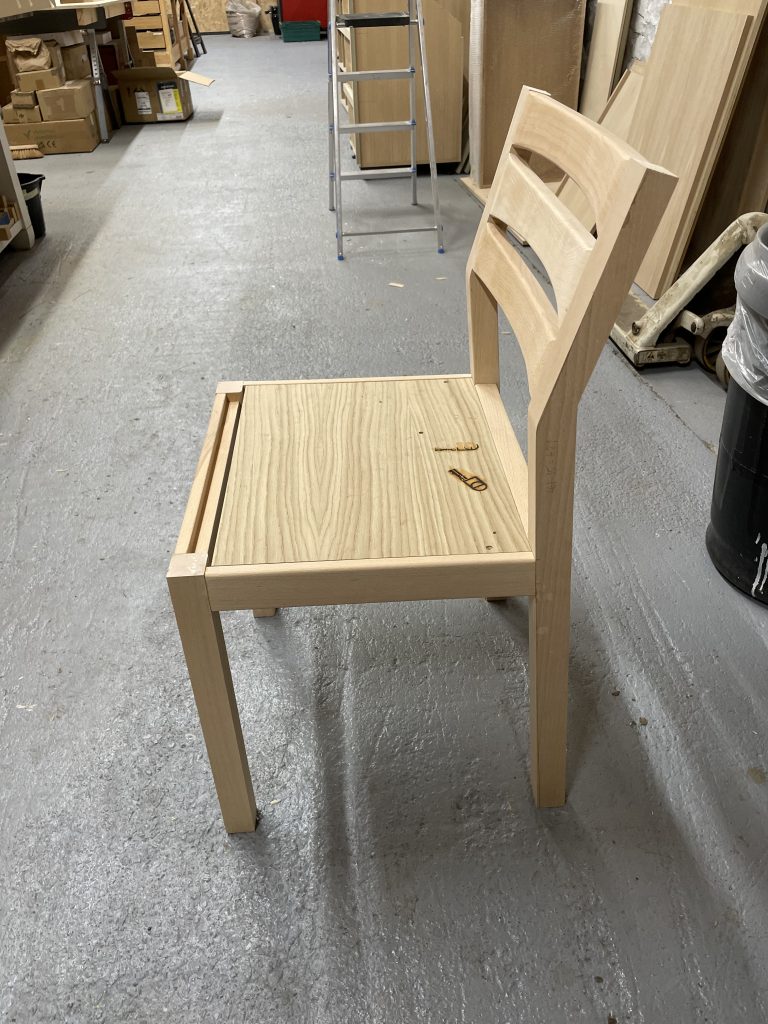
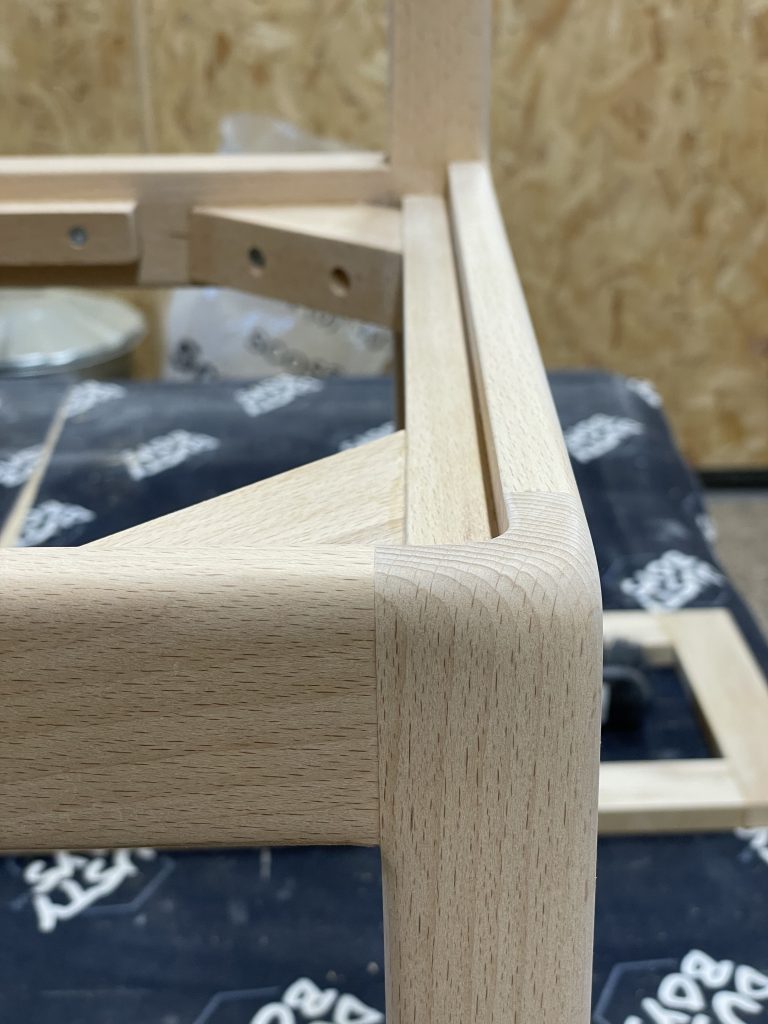
To test all of this ‘theory’ I made a mockup from pine (which is very cheap). This gave me a chance to check sizes and proportions and to play around to find the best angles. I subsequently made a full production version from beech (which is a cheap hardwood, and underrated). This version received the seal of approval for comfort from my wife and so the design was locked down and the oak versions you see here were completed.
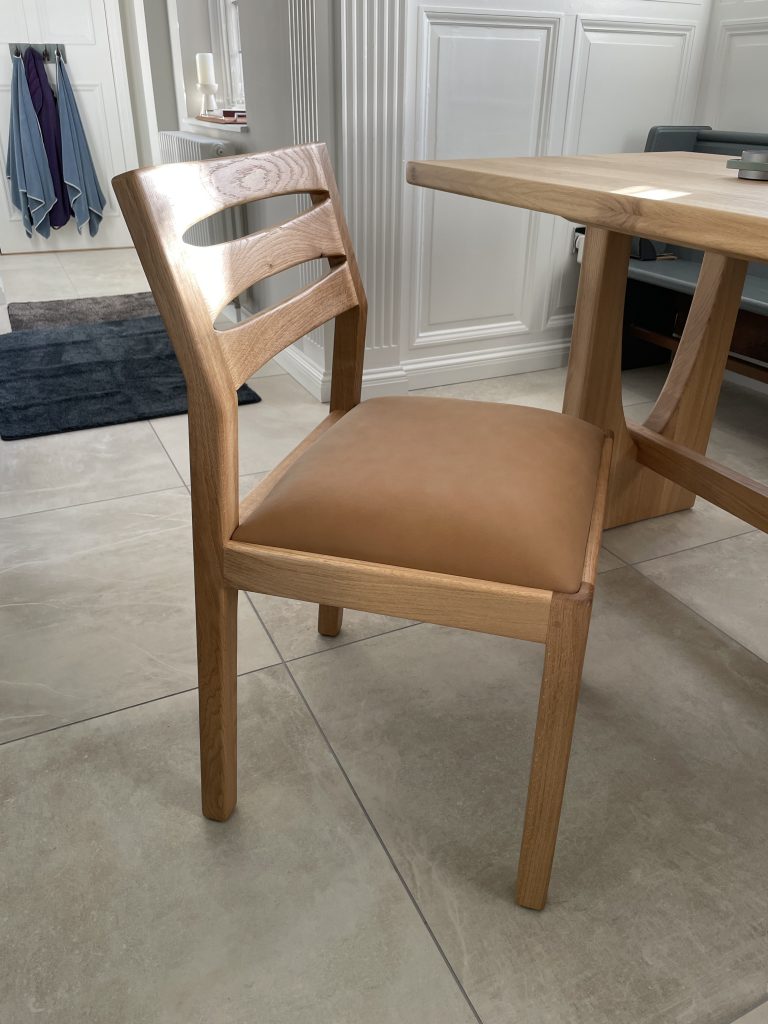
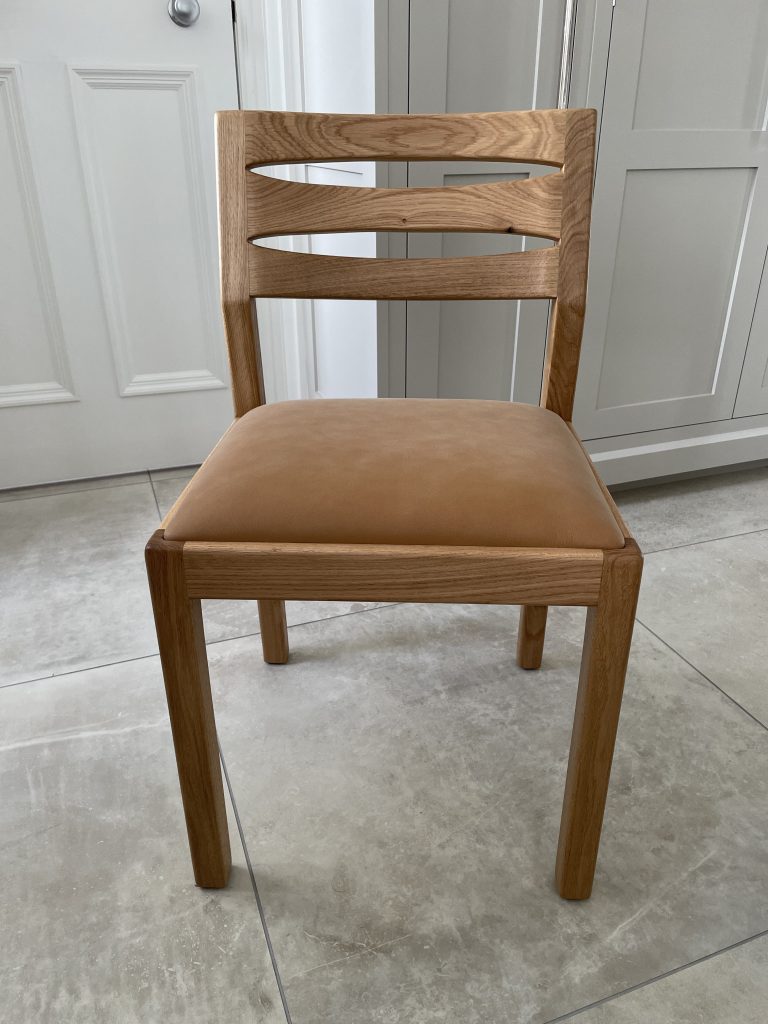
The client is delighted with all of the pieces, and so that means that I am too.
Dimensions (approximately): table L 2000 x W 800 x H 780 mm; stools W 480 x H 470 x D390; chairs W 480 x H850 x D470